

Whether you’re experiencing vision problems or just want to check if your eyes are healthy, our eye tests can help you get some answers.
Our team of New Zealand optometrists will perform a comprehensive assessment of your vision, eye muscles, and look for any signs of eye conditions like blurred vision, hyperopia, cataracts, and more.
Our comprehensive eye tests are actually a series of tests to evaluate your eye health and function. The purpose of an eye test is to determine if you need glasses, contact lenses, or another form of treatment to correct your vision.
Our optometrists will ask you about your medical history and any vision problems you may be experiencing. Then, they’ll evaluate your vision, eye-muscle function, individual optic structures, and overall eye health.
What to Expect
Before we perform any physical examinations on your eyes, we must first develop a full vision profile. We’ll ask you questions about your:
Types of Tests
Preliminary Testing
Note: Some preliminary tests may be performed by one of our optometry assistants.
Optometric Examination
Yes! Schedule your eye test online at any of our Christchurch-area locations using our booking link.
20/20 vision is defined as “normal” vision. 20/40 means you are near-sighted. 40/20 means you are far-sighted. Your optometrists will discuss any other diagnoses directly with you.
Our comprehensive eye test assesses your vision and eye health. It includes visual acuity checks, eye pressure measurement, retinal imaging, refraction, and detailed examination of the eye's internal and external structures.
We recommend having an eye exam every 2 years, or more frequently if you have diabetes, a family history of eye disease, or changes in your vision.
This test measures the pressure inside your eye and helps detect glaucoma—an eye condition that can lead to vision loss if left untreated.
Refraction tests the focusing power of your eyes to determine your prescription for glasses or contact lenses. It identifies short-sightedness, long-sightedness, astigmatism, or age-related near vision issues.
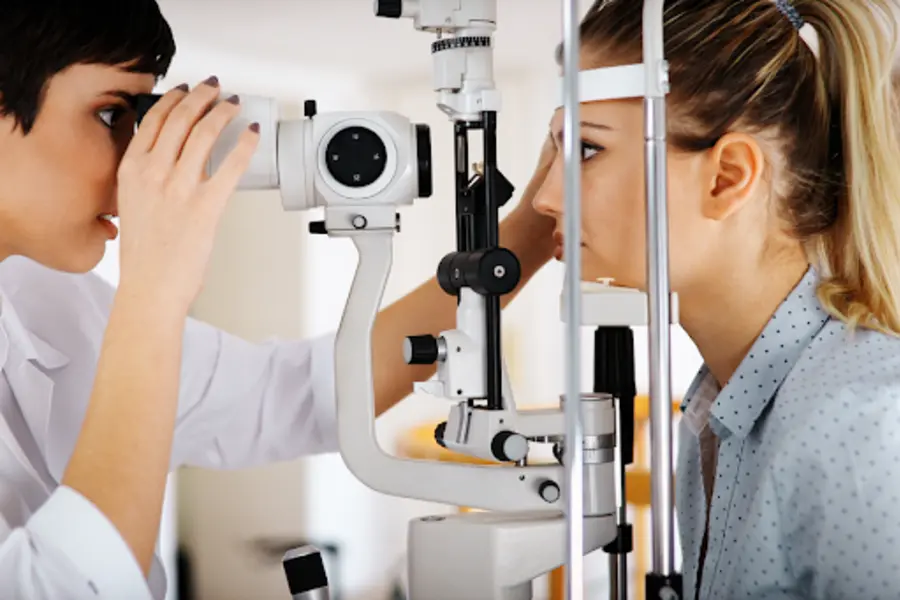
A slit-lamp is a special microscope used to examine the structures of your eye, including the eyelids, cornea, lens, and retina. It helps diagnose a wide range of conditions, from dry eye to cataracts and macular degeneration.
Possibly. Dilation is standard for patients over 65, new patients over 45, or when a more detailed internal eye exam is needed. It allows the optometrist to better assess your retina and optic nerve.
Yes, we include retinal photography as part of our comprehensive eye exam. This imaging captures detailed pictures of the back of your eye to help detect and monitor eye diseases.
Absolutely. Our tests—including retinal imaging, eye pressure measurement, and OCT scans—are designed to detect early signs of glaucoma, macular degeneration, diabetic retinopathy, and other eye conditions.
Visual field testing checks your peripheral vision and helps detect blind spots or early signs of conditions like glaucoma or neurological issues.
Yes. We provide full children’s eye exams to detect vision issues that may affect learning or development. Early testing supports healthy visual development.
Book An Eye Test